



Quick Answer: What Size Should You Choose?
To size a paper pendant light, first decide whether it will hang above furniture or in an open part of the room. For a general ceiling fixture, one design rule is to add the room's length and width in feet and use the sum as a starting diameter in inches.
For example, a 10-by-12-foot bedroom gives you a starting diameter of 22 inches. But a 22-inch shade is not automatically suitable for an 8-foot ceiling. Check the shade's vertical height, suspension length and available headroom before choosing a size.
Above a dining table, start with the tabletop's dimensions instead of the room's overall size. These measurements are design guidelines, not installation requirements.
A rice paper pendant light should feel generous in the room, without getting in the way of everyday life.

Paper Pendant Light Size Chart by Room
|
Example space |
First measurement to try |
What may change the choice |
|
10 × 12 ft bedroom |
22-in diameter for a central fixture |
Eight-foot ceiling; position over bed or walkway |
|
12 × 14 ft living room |
26-in diameter for a central fixture |
Shade depth; coffee table and walking routes |
|
48-in-wide dining table |
About 24-in diameter as a conservative starting point |
Table shape; sightlines; hanging drop |
For the dining example, a 24-inch shade leaves 12 inches between its edge and each side of a 48-inch-wide table when centered. A 30-inch shade leaves only 9 inches.

Measure the Whole Fixture, Not Just Its Width
Before ordering a paper pendant lamp, check the shade's diameter, vertical height and complete installed drop. The lowest point—not the length of the cord alone—determines available headroom.
Design guides, including Lumens' ceiling light sizing guide, suggest roughly 7 feet of clear space beneath hanging lights in walking areas, and about 30–36 inches between the tabletop and a dining pendant's bottom. These are planning references, not a substitute for fixture instructions or local electrical requirements.
Consider an 8-foot (96-inch) ceiling. A genuinely spherical shade that is 24 inches tall would leave at most 72 inches of clearance, even before adding suspension hardware. That makes it unsuitable for a route where people need to walk underneath. Over a fixed table, the calculation and viewing angles are different.

Bedroom: Choose the Position Before the Size
In a 10-by-12-foot bedroom, the 22-inch calculation is only a first comparison.
Where will the shade go? A pendant beside the bed can be smaller and lower than one placed near the center of the room.
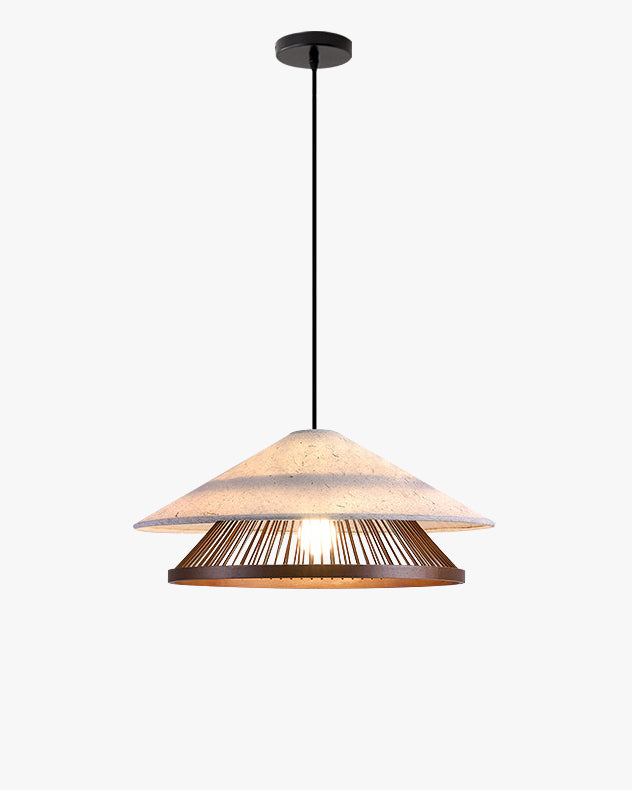
For a practical comparison, WOMO's WM3118 Paper & Bamboo Cone Pendant comes in 13.8-, 17.7- and 21.7-inch diameters. The smaller versions may feel more balanced beside a bed, while the 21.7-inch option comes closer to the 22-inch room-size guideline.
The largest shade is 9.1 inches tall, but its full installed drop will also depend on the suspension. Always check the final hanging height, particularly with an 8-foot ceiling.
If the fixture will sit above an open route, prioritize clear headroom over the room-size formula. Browse bedroom pendant lights for alternative shapes.
Living Room: Think About Shape as Well as Diameter
A 12-by-14-foot living room gives a 26-inch diameter as an initial reference. Yet a wide, shallow shade over a coffee table may suit the space better than a deeper globe of similar width.
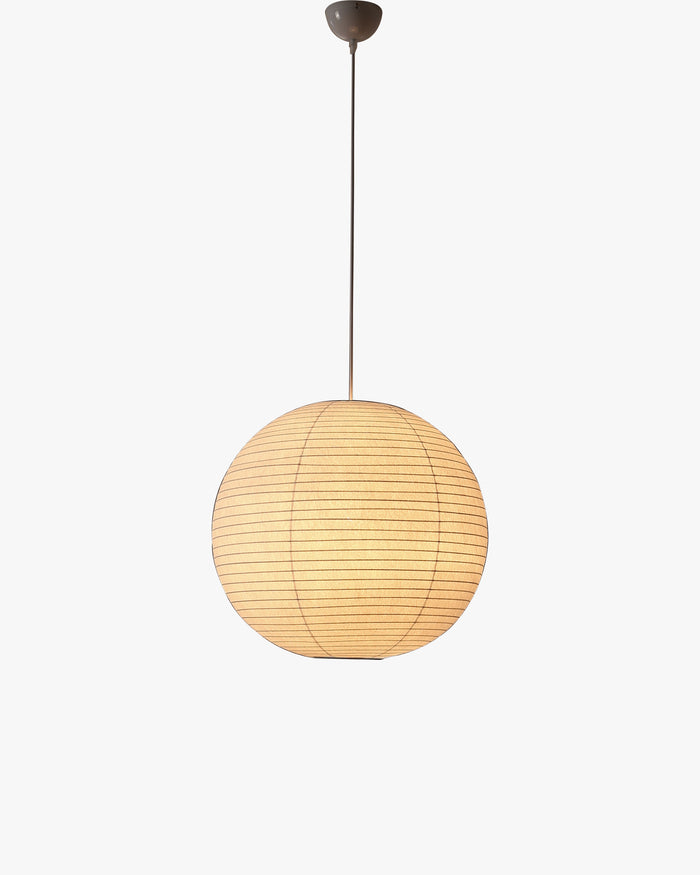
A round pendant light brings an easy, familiar silhouette, while a flatter shade may preserve more space below it. Neither shape is automatically brighter. Check the listed light output, and consider a reading lamp or wall lighting where tasks need extra illumination.
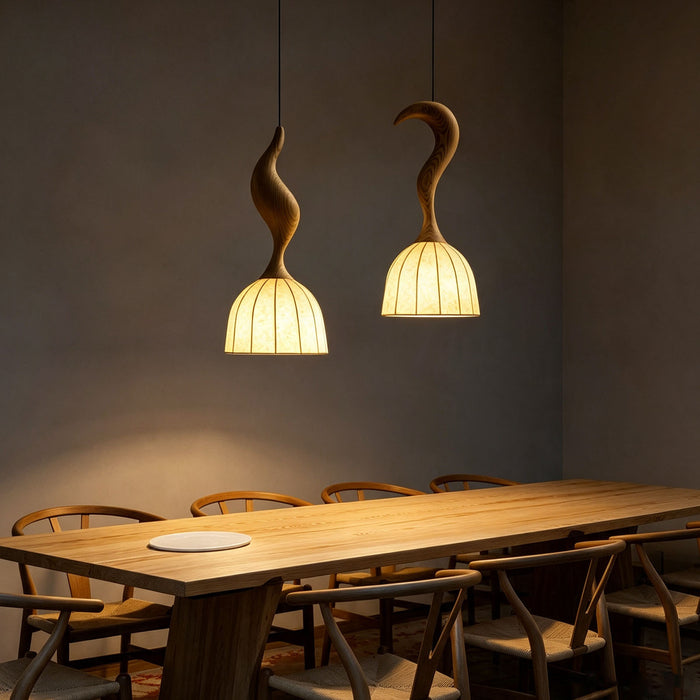
A narrower shade does not always mean a shorter fixture. For example, WOMO's WM3244 Bell Paper Shade Pendant measures 9 inches across but 20 inches tall. That vertical depth matters when the pendant hangs near a seating area or walkway.
For a larger statement piece, consider both the shade's width and its installed height. Explore WOMO's living room pendant lights to compare other shapes.
Dining Room: Let the Table Lead
For dining room lighting, measure the tabletop before the room. For a single centered pendant, roughly half to two-thirds of the table's width is a useful initial comparison. Then check the distance from the fixture to the table edges.

A paper chandelier can become a focal point above a dining table, but its width should work with the furniture beneath it.
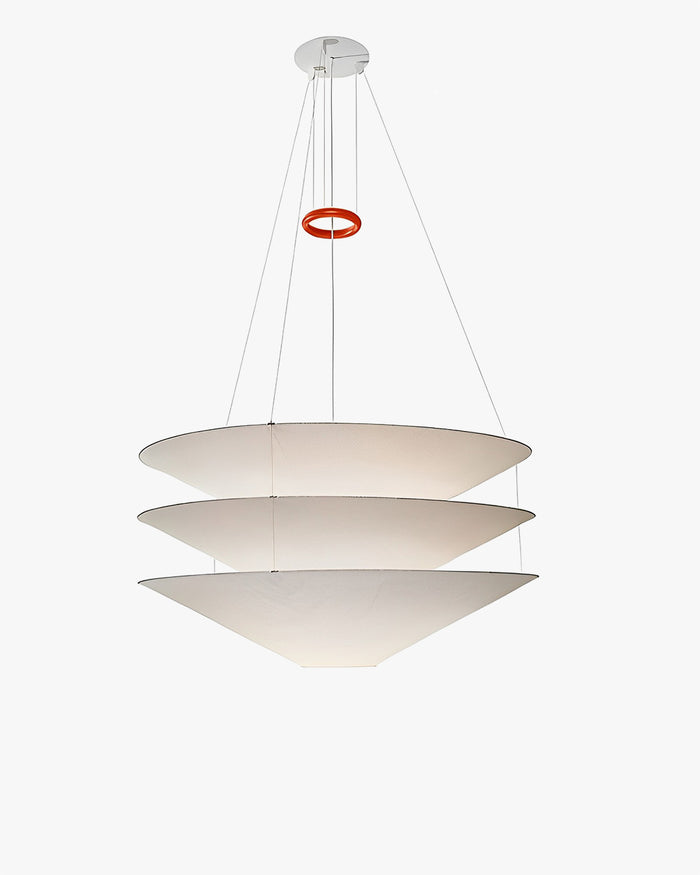
Take WOMO's WM2775 Tiered Cone Rice Paper Pendant, available in 30- and 39-inch diameters. Over a 48-inch-wide table, the 30-inch version would leave about 9 inches of space on either side when centered. The 39-inch version extends much closer to the table edges, making table proportions and sightlines especially important.
Before choosing either size, confirm the fixture's total installed drop and make sure the lowest point can sit at a comfortable height above the tabletop.
For a long rectangular table, two smaller pendants may create a more even visual span than a single round shade. Compare dining room pendant lights before choosing.
What to Check Before You Buy
Before choosing a paper pendant light, write down four measurements: your ceiling height, the width of the furniture beneath the light, the shade's full height and the clearance you want below the fixture.
Check these against the manufacturer's listed dimensions and suspension details. If the pendant hangs over a dining table, measure from the tabletop to the fixture's lowest point. In open walking areas, prioritize headroom.
Finally, confirm the light output, bulb type, mounting requirements and whether dimming is supported. A pendant that looks right in a photograph still needs to work in your actual space.
Find Your Fit at WOMO Lighting
A pendant should bring a warm, welcoming glow while leaving room for the way you live.
Compare shade shape, actual dimensions and your room's proportions in WOMO's pendant light collection.
THE WOMO LIGHTING EDIT
Find Your Perfect Paper Pendant
From timeless globes to sculptural paper shades, explore different silhouettes and find the right proportions for your space.
← SWIPE TO EXPLORE →
Your space. Your perfect light.
EXPLORE MORE →Discover more shapes, sizes and styles at WOMO Lighting.
Frequently Asked Questions
Can a 24-inch paper globe work with an 8-foot ceiling?
Possibly above fixed furniture, if the complete installation provides appropriate clearance. A full 24-inch-tall globe cannot give seven feet of headroom beneath an eight-foot ceiling, even when placed right against it.
How high should a paper pendant hang over a dining table?
About 30–36 inches from the tabletop to the fixture's lowest point is a common starting range. Adjust for shade depth, sightlines and installation instructions.
Is a bigger paper shade necessarily brighter?
No. Shade diameter describes physical size, not guaranteed brightness. Compare the manufacturer's published lumens, bulb configuration and how the fixture spreads light.
Should I choose one big pendant or two smaller ones?
Start with table shape and length. One centered shade often suits a round table; two evenly spaced pendants may feel more balanced over a long rectangular table.
Are paper shades difficult to maintain?
Care depends on the actual material and construction. For more guidance, see WOMO's rice paper lamp care guide.